
Vehicle Insurance

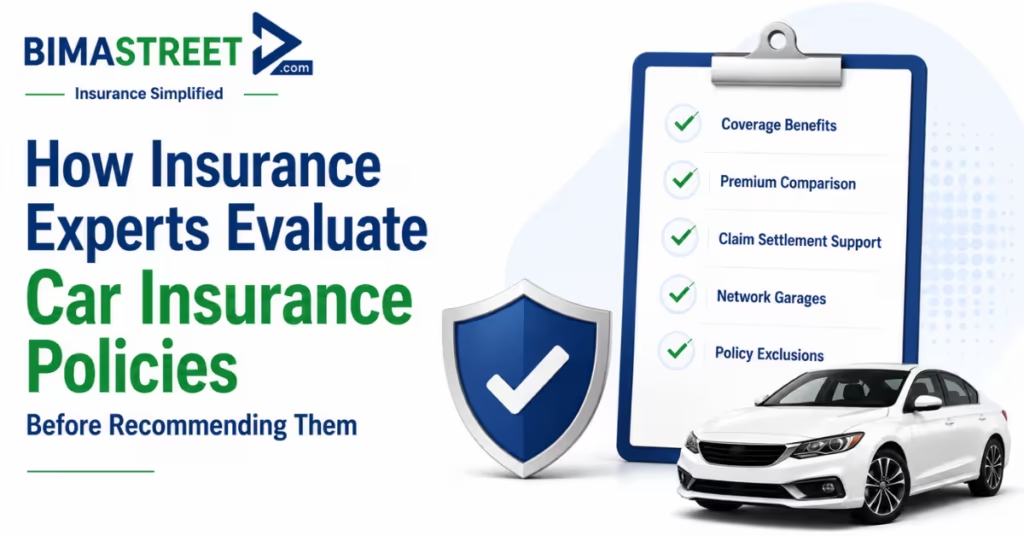
How Insurance Experts Evaluate Car Insurance Policies Before Recommending Them - Car Insurance Comparison
BimaStreet Blogs, Car insurance

How Insurance Experts Evaluate Car Insurance Policies Before Recommending Them

Getting a car insurance policy is not just about getting the most affordable premium A Car Insurance Comparison is a comparison of different areas of policy such as coverage benefits exclusions ease and support in claiming insurance network garages for cashless claim service and quality of customer service Not all vehicle owners have the same need which is why these factors are weighed carefully by insurance experts before each policy is recommended One driver’s preferred policy may not be the best choice for another. This guide contains an overview of how insurance experts analyze car insurances and the differences you need to look for before buying or renewing your policy. Why Car Insurance Comparison Is Important Compare More Than Just Premium Because price point never mind coverage value is the only basis on which so many policy holders buy insurance. But a lower premium might also mean less coverage than what you actually need Helpful contribution along with Car Insurance Comparison: Understand policy features. Compare coverage benefits. Review exclusions. Evaluate claim support. Identify suitable add-on covers. Choose better value for your money. Compare policies side-by-side so that you can make an educated choice Coverage Offered by the Policy Review What Is Included Policy Coverage Experts look at the policy coverage first. They compare whether the policy provides coverage for: Third-party liability. Own damage. Theft. Fire. Natural calamities. Man-made disasters The extent of coverage varies with the insurer and the type of policy chosen Add-On Covers Evaluate Optional Benefits Optional add-on covers can enhance your coverage significantly. Common add-ons include Zero depreciation cover. Engine protection. Roadside assistance. Return to invoice cover. Consumables cover. Key replacement cover Choose only the add-ons that complement your vehicle in terms of age, purpose, and budget, as recommended by experts Network Garages and Claim Support Convenience During Repairs Insurance specialists also compare the garage facilities across the insurer’s network Residual payments can either be paid directly into your bank account or to an appropriate agency that provides a cashless repair service such as the Insurance Theft Response Network However a wider network of approved garages may also save on call out time and hence become more convenient They also review: Claim assistance. Customer service. Digital claim process. Emergency support Better claim support helps create a positive overall experience for customers Policy Exclusions and Conditions Read the Fine Print Every insurance policy has exclusions Experts carefully review: Coverage limitations. Deductibles. Policy conditions. Exclusions. Claim procedures Knowledge of these particulars prevents misleading conclusions when the claim is settled. Premium and Overall Value Balance Cost and Protection Even though premium is a crucial aspect, experts look at the total offering in terms of value as well They compare: Coverage. Premium. Add-on benefits. Customer support. Claim process. Network garages The aim is to recommend coverage that adequately protects you, not merely the lowest rate Tips for Comparing Car Insurance Policies Make an Informed Decision Tips before buying or renewal of car insurance: Compare multiple insurers. Review policy coverage carefully. Understand exclusions. Check network garages. Evaluate optional add-ons. Read customer reviews. Understand the claim process By comparing these features you can choose a policy that is best for your requirement Frequently Asked Questions Why is car insurance comparison important? Comparing policies allows you to analyze the differences in coverage, benefits exclusions and limitations offered by each policy, along with premiums and claim support which can help you select a plan that meets your needs best Should I always choose the cheapest car insurance policy? Not necessarily. Although a lower premium may come with different exclusions or contingency benefits Best to check the total value a policy provides How often should I compare car insurance policies? Although this is not something you want to do every day, you should compare policies each renewal date because over time your coverage needs and policy options will change. Conclusion The Car Insurance Comparison is not just a comparison of premiums. Insurance professionals analyse anything from coverage add-on covers exclusions, claim support, network garages, customer service and other policy conditions before giving a recommendation on a policy Compare best quotes from different car insurance companies, read the policy documents carefully and purchase a coverage that works with your driving habits and pocket An educated choice that you make today will lead to additional financial protection along with increased peace of mind while driving. At BimaStreet, we believe informed decisions lead to better protection. Understanding your options today can help you secure a healthier and more financially confident tomorrow  

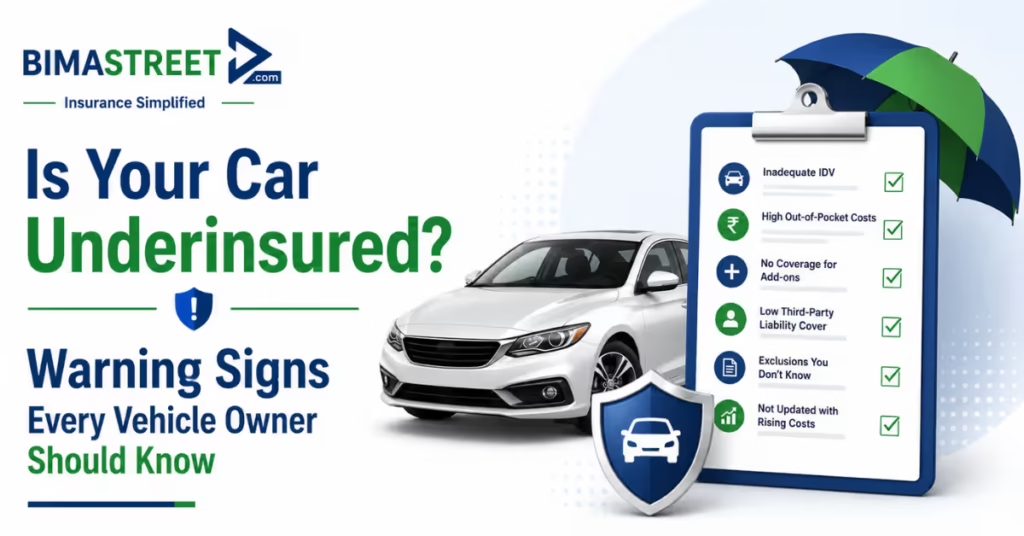
Is Your Car Underinsured Warning Signs Every Vehicle Owner Should Know - Car Insurance Coverage
BimaStreet Blogs, Car insurance

Is Your Car Underinsured? Warning Signs Every Vehicle Owner Should Know

Purchasing car insurance is really just a crucial step in protecting your finances against sudden losses. But just having a policy does not mean that you have sufficient Car Insurance Coverage Most car policy holders find out they have holes in their coverage after an accident or other insured occurrence that is going to cost them money meaning certain damages or expenses may not be covered under the terms of their pledge If you are underinsured, it opens a Pandora’s box of massive uncovered expenses. This is why you should review your policy on a regular basis to make sure it suits the value of your car, driving habits and financial situation Here is the Article that will help you to recognize the classic alarm bells indicating your Car Insurance Coverage falls short and how to evaluate this, so you can do something about it What Does Car Insurance Coverage Mean? Understanding Your Protection Car Insurance Coverage refers to the amount or type of coverage you have with your insurance Depending on what type of policy you pick, coverage can include Third-party liability. Damage to your own vehicle. Theft. Fire. Natural calamities. Man-made disasters. Optional add-on covers Learning your coverage allows you to better understand the type of protection your policy provides and where there may be gaps. Warning Sign #1: You Only Have Third-Party Insurance Consider Your Protection Needs Indian law requires that third-party insurance be obtained before driving on public roads Nonetheless, it typically offers only third-party coverage and does not cover your own vehicle for damages If you only get third party insurance, you may have to pay for repairs to your own car after some events Warning Sign #2: You Haven’t Reviewed Your Policy in Years Your Insurance Needs Can Change There are several reasons why you might need different insurance than what you have now Vehicle age. Usage pattern. Change in location. Additional accessories. Financial priorities. Checking your coverage at each renewal means making sure that you have the right amount of coverage Warning Sign #3: You Don’t Know What Your Policy Covers Read the Policy Carefully The majority of policyholders buy the insurance without going through the policy document. Take time to understand: Coverage. Exclusions. Deductibles. Claim procedure. Add-on covers. Well, this information must be known before a tragedy, so that things do not get confused while filing the claim Warning Sign #4: You Haven’t Considered Add-On Covers Additional Protection May Be Helpful Optional add-ons can help your vehicle and the way you drive Zero depreciation cover. Engine protection. Roadside assistance. Return to invoice cover. Consumables cover may provide additional financial protection. Take your time and analyze these options so you will know if they are right for you Warning Sign #5: Your Vehicle’s IDV Has Not Been Reviewed Understand the Insured Declared Value IDV or Insured Declared Value is the approximate value for which your car will be insured, and has a significant impact on premiums and claims in some cases Getting the IDV reviewed when renewing a policy can ensure it adequately represents your vehicle How to Improve Your Car Insurance Coverage Smart Steps for Better Protection To strengthen your coverage: Compare multiple insurance plans. Review your policy every year. Understand exclusions. Select suitable add-on covers. Keep your policy active. Maintain accurate policy information. Read the claim procedure carefully Learning how to make smart choices will lead you to select the right coverage option Frequently Asked Questions How do I know if my car is underinsured? If the policy you hold is not offering protection as per your requirement or if you are not certain about its coverage, exclusions, or the IDV of your four wheeler, reviewing your policy with your insurance provider may be worthwhile Does comprehensive insurance provide better coverage? Comprehensive insurance can often provide more coverage than third-party insurance, as it also protects your own vehicle against several insured perils in addition to third-party liabilities, but this will depend on the actual terms of the policy Should I review my car insurance every year? Yes. Your policy should be reviewed when it is time to renew, so your coverage stays in line with the value of your car, who drives your car, and what you can afford Conclusion Car Insurance is necessary to have but Right Car Insurance Coverage is more essential A regular review of your policy, knowing what is covered, analysing the IDV and deciding on optional add-on covers can help you in better preparing for those unforeseen scenarios Check out alternative choices, read the policy, and get coverage according to your needs prior to acquiring or restoring a policy. Spend a moment today learning about your insurance to help you understand decisions you know will need to be made down the road At BimaStreet, we believe informed decisions lead to better protection. Understanding your options today can help you secure a healthier and more financially confident tomorrow
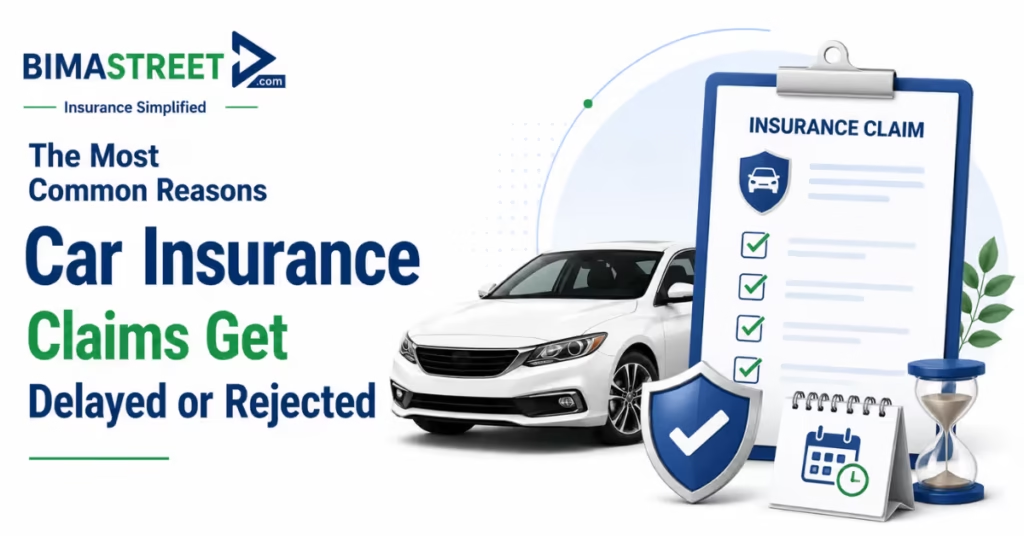
The Most Common Reasons Car Insurance Claims Get Delayed or Rejected - Car Insurance Claim Rejection
BimaStreet Blogs, Car insurance

The Most Common Reasons Car Insurance Claims Get Delayed or Rejected

Car insurance is intended to cover you for events such as accidents which are not things that can predict theft extreme weather (such as hail hurricanes) and third-party liabilities but only when it is stated in the policy But these are not what many policyholders end up expecting when their claims are delayed or rejected instead An insurer can reject or delay a car insurance claim due to various reasons such as lack of adequate documentation, giving late intimation about the claim, including policy exclusions or failure to follow its claim process These are just a few of the reasons and by understanding these you avoid getting into unnecessary complications and help improve your overall claim experience In this guide, we provide you with an overview of the top reasons why your Car Insurance Claim Rejection could be delayed or rejected, along with tips on how to handle your insurance claim process as confidently as possible Delayed Intimation of the Accident Inform Your Insurer Promptly Notifying the insurance company well after an accident has occurred is one of the most common pitfalls for delays Insurance companies typically recommend that you report an accident as soon as is reasonable so the claim can be logged advice given and inspection booked if needed. You should give the correct report on the date, time and place of accident during reporting Quick communication helps the insurer to start the claim process immediately without any unnecessary delay Incomplete or Incorrect Documentation Submit the Required Documents Absence or mistakes in key documentation can lead to delays in claims. Based on the type of claim, insurers might ask for: Insurance policy copy. Registration Certificate (RC). Driving Licence. Claim form. Identity proof. Repair estimate. Accident photographs. FIR (where applicable). Bank account details. When you submit documents that are complete and accurate, it helps expedite the claim processing Repairs Before Inspection Follow the Insurer’s Claim Process Most insurers will want to see the car before repairs commence In fact, initiating repairs without informing the insurer could lead to issues for an assessment Always first contact your insurer and know the claim process before signing for repairs. Adhering to the process that is sought after promotes better claim settlement without difficulties Policy Exclusions The following things are included in premises liability insurance coverage The coverage options offered with each car insurance policy contain specific terms, conditions and exclusions. Policy exclusions and conditions, such as time limits for submitting a claim or reporting a loss to the insurer, may result in claims not being payable It is best to read your policy document beforehand in case of an emergency so that you know what is covered and what (if any) exclusion applies Incorrect or Misleading Information Be Accurate and Honest Every claim you submit is verified against the details you provide Ensure that information related to: The date and time that the accident occurred Date and time of the accident. Location. Driver details. Vehicle damage. Supporting documents. For some policies, the claim may be turned down but depending on the terms of your insurance policy and how much investigation your insurer conducts this may lead to Car Insurance Claim Rejection or just affect the process FIR Not Submitted When Required Know When an FIR May Be Needed A FIR may be needed in cases like: Vehicle theft. Serious injuries. Fatal accidents. Hit-and-run incidents. Certain third-party claims This depends on the type of incident, state laws as well as the claims process your insurer uses to determine if a report is necessary If in doubt, contact your insurer for advice. Expired Policy or Invalid Documents Keep Your Documents Updated Date, to prevent yourself from carrying a false insurance policy & driving licence Before driving, ensure that: Your insurance policy is active. Your driving licence is valid. Your vehicle registration documents are updated Having your documentation up to date is a good practice and helps avoid needless complications during the assessment of any Car Insurance Claim Rejection How to Reduce the Chances of Claim Delays Best Practices for Policyholders To benefit your claim experience, you can do the following Reporting accidents promptly. Taking photographs of the accident scene. Keeping all documents ready. Reading your policy carefully. Following the insurer’s instructions. Maintaining accurate records. Renewing your policy on time. It is better to be prepared beforehand and make the claim process easier when an emergency strikes Frequently Asked Questions Can a delayed claim still be approved? Yes. Each claim is evaluated in accordance with the terms of the policy facts relating to available proof, and the surrounding event Direct reporting is consequently advocated for so that redundancy may be avoided or prolonged delays averted Does every accident require an FIR? No. FIR is generally required only in case of theft grievous injuries due to accidental trauma such as hit-and-run or by law and or your insurance provider wherein it would be necessary Can incorrect information affect my claim? Yes. Giving false or misleading information would delay or Car Insurance Claim Rejection processing as well as settlement of the claim depending on what is stated in the policy and according to the insurer Conclusion is not just one fault that may cause a Car Insurance Claim to be Rejected or delayed. Often this is due to the fact that standard procedures were not followed or the information needed was lacking If you are insured, you should know your policy details, promptly allow claims to be reported, ensure that there is proper documentation and your insurer’s claim compliance or procedure. Review the policy coverage, cancellations, claim process and required documents before buying or renewing car insurance online. Knowing these things today will allow you the confidence to handle unexpected situations that arise and never lose financial backing when you need it the most. At BimaStreet, we believe informed decisions lead to better protection. Understanding your options today can help you secure a healthier and more financially confident tomorrow
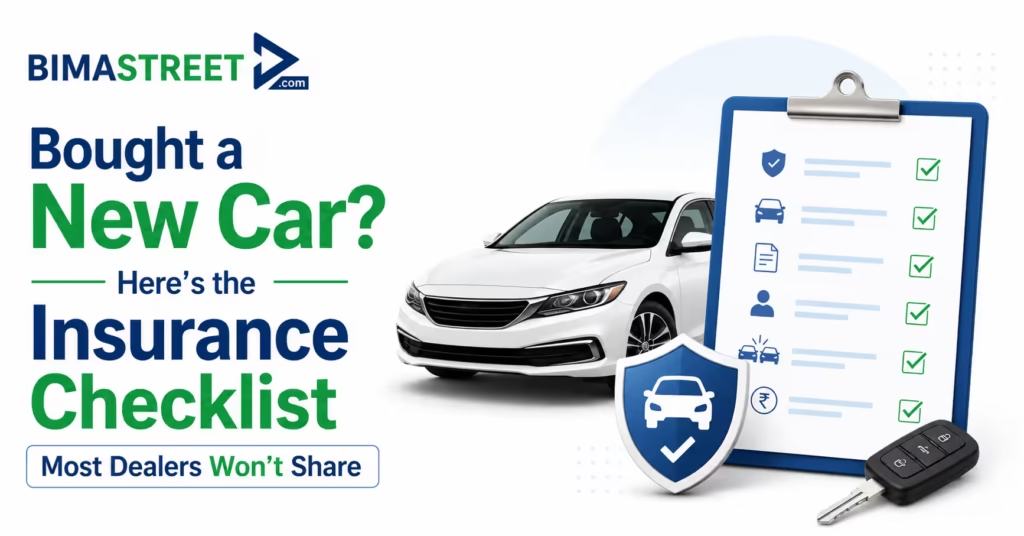
Bought a New Car? Here's the Insurance Checklist Most Dealers Won't Share - New Car Insurance
BimaStreet Blogs, Car insurance

Bought a New Car? Here’s the Insurance Checklist Most Dealers Won’t Share

Especially if you are going to be insuring a brand new car before you pick it up buying a new car is exciting and there is one decision you should make before driving it home New Car Insurance The majority of dealerships will sort insurance as a result of the sale and several buyers just sign up to 1st choice they are supplied, not likely with understanding what it entails or if it overlooks everything needed A good insurance policy is capable of shielding you from unanticipated monetary loss due to accidents theft natural calamities and third party liabilities But not all policies offer the same level of coverage. By knowing your options prior to purchasing insurance you can select coverage that offers value while also providing peace of mind New Car Insurance checklist This covers what all new car owners need to double-check before signing any type of policy Why Is New Car Insurance Important? Financial Protection from Day One Driving a new vehicle with not enough insurance can leave you desperately under-protected if disaster strikes Comprehensive auto insurance policy covers repair of the vehicle, theft, natural calamities, fire and third-party loss as per the terms and conditions defined in your policy. Getting the right coverage at the outset safeguards your investment and saves you money and worry should something go wrong. Checklist #1: Choose the Right Type of Insurance Understand Your Coverage Options Do Your Research Before Buying New Car Insurance Generally, car insurance includes: Third-party insurance. Comprehensive insurance Although third party insurance is enough for driving on public roads, comprehensive motor ensures you are still insured against a wider range of risks affecting your own vehicle in addition to the third party cover Choose the protection that best serves your needs and fits your budget. Checklist #2: Check the Insured Declared Value (IDV) Understand Your Car’s Insured Value IDV is the insurance company’s estimate of how much your car would be worth and therefore how much pay out you will receive in the event of a total loss or theft, so it directly affects both your premium and claim amount Your policy will mention the IDV the greater the IDV, the better coverage that your vehicle can get learn about it before you decide Checklist #3: Review Add-On Covers Carefully Extra Protection When You Need It Optional add-on covers are provided by many insurers to expand your coverage Popular add-ons include: Zero depreciation cover. Engine protection. Roadside assistance. Return to invoice cover. Consumables cover. Key replacement cover. Tailor add-ons for your driving behaviour, location and funds rather than selecting from each obtainable providing Checklist #4: Verify the Network Garage List Cashless Repairs Can Be Convenient Cashless repairs are provided by garages within your insurer’s approved network Before purchasing your policy: Check whether trusted garages near your home are included. Understand the cashless claim process. Review customer support options A good network may make future repairs easier. Checklist #5: Understand Policy Exclusions Know What Isn’t Covered Every insurance policy contains exclusions Go through your policy thoroughly reading in situations when claims may not be payable, and any deductibles, waiting requirement (if applicable), or conditions of the policy These particulars help in avoiding misunderstanding during the claim settlement process Checklist #6: Compare Policies Before Buying Don’t Accept the First Offer So, most of the buyers buy the suggested insurance policy from their dealership only as they do not look at alternatives Before making a decision, compare: Coverage benefits. Premium. Add-on covers. Claim support. Network garages. Policy exclusions. The comparison of policies helps you in taking an informed decision Checklist #7: Read the Policy Documents Understand the Fine Print Before you settle on your New Car Insurance, evaluate: Policy wording. Coverage details. Claim process. Deductibles. Renewal conditions. Contact details for emergency assistance. Being prepared for the emergency may also help you save time if something happens today compared to understanding your policy Common Mistakes New Car Buyers Should Avoid Learn Before You Buy Avoid these common mistakes: Buying insurance based only on price. Ignoring policy exclusions. Choosing unnecessary add-ons. Not checking network garages. Failing to compare multiple policies. Not reading the policy document Being prudent will prevent unpleasant surprises down the line Frequently Asked Questions Is comprehensive insurance better for a new car? Comprehensive insurance is a more extensive coverage of the field, which is why most new car owners can fill it The correct picking of it demonstrates moreover understanding with things you need money related softness and furthermore inclination to hazard Are add-on covers necessary for a new car? Optional add-on covers Probably not all are required but some may be beneficial to cover based on your type of driving and the value of your vehicle Can I buy car insurance from a company other than the dealership? Yes. The best part is that buyers can compare one insurance policy of an insurer or insurance intermediary with the other and then be able to choose what suits them the best. Conclusion Buying New Car Insurance isn’t just about satisfying the law somewhere, it’s also important for protecting one of your most valuable assets. Compare coverage options, examine the IDV (Insured Declared Value), understand exclusions in your policy contract, evaluate add-on covers and check the network garages of the insurer, claim process before finalizing your policy. Understanding your policy before getting behind the wheel of your new car and driving it home can ensure that you make informed decisions, spare yourself from overspending unnecessarily, and enjoy more peace of mind every time you hit the road At BimaStreet, we believe informed decisions lead to better protection. Understanding your options today can help you secure a healthier and more financially confident tomorrow

Contact Details

Support mail:

care@bimastreet.com

Claim mail:

claim@bimastreet.com

For Other Query:

info@bimastreet.com

Phone Number:

(+91) 9391009482/84/89

BIMASTREET is the online insurance platform of
Amaze insurance brokers pvt ltd


Corporate Office :- #403, THE LEGEND, Metro Pillar C1338, Motilal Nehru Nagar, Begumpet, Hyderabad – 500016

Regd Office: – Ground Floor, Villa No.10, Richmond Villas, Near Glendale International School, Hydershakote, Hyderabad-500086.

Website Approved By IRDAI(Govt. of india)
ISNP Ref: IRDAI/INT/ISNP/2021/79
IRDA License Number: 549
Licensed on: 24/02/2025
Valid Upto: 23/02/2028

Disclaimer: Disclaimer: Insurance is the subject matter of solicitation. Visitors are hereby informed that their information submitted on the website may be shared with insurers. The product information for comparison displayed on this website is of the insurers with whom our company has an agreement. Product information is authentic and solely based on the information received from the Insurer. The information provided on this website/page is for information purpose only. Bimastreet.com does not in any form or manner endorse the information so provided on the website and strives to provide factual and unbiased information to customers to assist in making informed insurance choices.

Scroll to Top