

Car accidents can occur anywhere and at any time, from driving to work or the grocery store, dropping your kids off at school, to travelling for a weekend trip
Besides it being the first priority, the actions taken post subsequent accidents can also be significant towards your motor insurance claim.
Most policyholders are under the impression that as long as they have taken a car insurance policy, there shall be no difficulty in making a claim
In fact, insurers get an entire breakdown of the claim based on the policy terms and the details of the accident along with documents submitted.
Forget about key procedures, delay in contacting or insufficient information may either prolong the process of a claim or lead to difficulties that could be avoided
By familiarising yourself with these common Car Insurance Claim Mistakes, you will be better able to stay calm, follow the right process and set your claim up for success
This article elaborates on seven Car Insurance Claim Mistakes that can lead to stress-free Indian motor insurance claims.
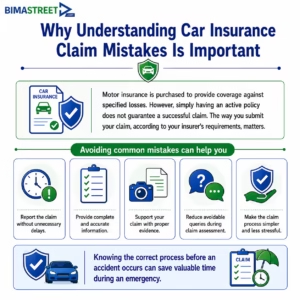
Why Understanding Car Insurance Claim Mistakes Is Important
Motor insurance written or purchased to provide coverage against the specified losses
But simply having an active policy is not enough that you will succeed in your claim the way you submit a claim according to your insurer matters
Avoiding common mistakes can help you
- Report the claim without unnecessary delays.
- Provide complete and accurate information.
- Support your claim with proper evidence.
- Reduce avoidable queries during claim assessment.
- Make the claim process simpler and less stressful
Knowing the correct process before an accident occurs can save valuable time during an emergency
Mistake #1: Delaying Intimation to Your Insurance Company
Inform Your Insurer as Soon as Possible
Waiting Too Long To Inform The Insurance Company About The Accident This is the most common Car Insurance Claim Mistakes.
Once the safety of all concerned has been secured reach out to your insurer either via its helpline mobile application website or through a branch office
Informing the insurer early allows for the claim to be registered and the next steps of registration, survey (if required) to be discussed
When reporting the accident:
- Provide the Correct Date and Time.
- Mention the accident location.
- Describe the incident honestly.
- Do what your insurer says you should do
In general, prompt reporting leads to a more efficient claims process
Mistake #2: Not Collecting Evidence at the Accident Scene
Documentation Can Support Your Claim
Gather basic evidence at the crash scene, if safe to do so
Useful evidence includes:
- Photographs of vehicle damage.
- Pictures of the accident location.
- Road and weather conditions.
- Vehicle registration numbers.
- Contact details of other parties involved.
- Witness information, if available
Proper documentation will give the insurer a clearer picture of what exactly happened, so it may not have to explain itself further
Mistake #3: Starting Repairs Without Following the Claim Process
Wait for Your Insurer’s Guidance
Tons of vehicle proprietors need to restore their vehicles right away after an accident.
But depending on the insurer and type of claim, a survey or inspection may have to be conducted beforehand.
Before authorizing repairs:
- Inform your insurer.
- Ask whether a survey is required.
- Obtain repair estimates if requested.
- Preserve damaged parts if instructed.
The claim procedure helps prevent delays during the insurer’s settlement process
Mistake #4: Providing Incorrect or Incomplete Information
Accuracy Matters
Details given during claim assessment are verified by insurance companies.
Make sure information that you enter about:
- Accident time.
- Accident location.
- Driver details.
- Vehicle damage.
- Previous repairs or claims.
- Supporting documents
Providing incorrect or incomplete information may result in further verification and can affect the policy terms while processing a claim
Mistake #5: Not Understanding What Your Policy Covers
Read Your Policy Before an Emergency
Most people read their insurance policy only post-accident
Before filing a claim, understand:
- Type of policy purchased.
- Coverage available.
- Deductibles.
- Exclusions.
- Add-on covers, if any.
- Cashless garage availability
Understanding your policy helps you know what costs are effective and which materials may need to be mentioned
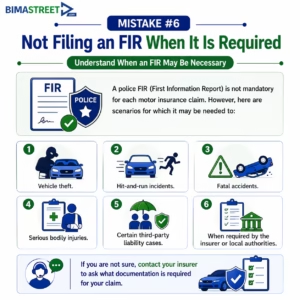
Mistake #6: Not Filing an FIR When It Is Required
Understand When an FIR May Be Necessary
A police FIR (First Information Report) is not mandatory for each motor insurance claim.
However, here are scenarios for which it may be needed to:
- Vehicle theft.
- Hit-and-run incidents.
- Fatal accidents.
- Serious bodily injuries.
- Certain third-party liability cases.
- When required by the insurer or local authorities
If you are not sure, contact your insurer to ask what documentation is required for your claim
Mistake #7: Losing or Misplacing Important Documents
Keep Documents Ready
Documentation helps insurers process claims quickly.
Documents commonly requested include
- Insurance policy.
- Registration Certificate (RC).
- Driving Licence.
- Claim form.
- Repair estimate.
- Photographs of the damage.
- Identity proof.
- FIR, where applicable.
- Repair invoices and payment receipts.
Having physical and digital versions of these documents can help you a lot during the process
Additional Tips for a Smooth Claim Experience
Here are ways to simplify the claims process for you
- Drive responsibly and follow traffic rules.
- Renew your insurance policy before expiry.
- Save your insurer’s emergency contact details.
- Keep your vehicle serviced regularly.
- Read your policy schedule carefully.
- Ask questions if you are unsure about the claim process
Having plans in place before an incident happens will help to reduce the stress level afterwards
Frequently Asked Questions
Can a delayed claim intimation affect my claim?
This is why many insurers expect accidents to be reported as soon as practically possible
Subject to the terms of your policy, either no delay will be acceptable or further explanation may be needed depending on the circumstances
Is an FIR compulsory for every car insurance claim?
No. An FIR is mostly needed in certain conditions like theft, death related accidents,
some third party cases or if the insurance company or law enforcement officials demand one
Can I repair my car before informing my insurer?
You should first notify your insurer and go through the claims process as described by them.
Depending on the claim, an inspection or survey may need to be carried out before work (repairs) commence
Conclusion
Going through a car accident is an overwhelming experience, but knowing the correct method of making claims will help ease the situation significantly
By steering clear of these basic Car Insurance Claim Mistakes, informing your insurer at the earliest possible stage, saving evidence from the scene
being honest about what happened and following your insurer’s claim process will keep the insurance checker for a hassle-free claim.
Comparison of coverage, claim assistance, network garages and policy benefits is also necessary before you buy or renew your policy
At BimaStreet, we believe informed decisions lead to better protection. Understanding your options today can help you secure a healthier and more financially confident tomorrow